
 |
Last week, it was announced that the humble robin, darling
of Christmas card manufacturers worldwide, has won a poll to find Britain’s
unofficial “National Bird”. Beating off its closest rival the barn owl by over
5000 votes, it confirmed what a love affair we Brits have with the little red
bird. It’s strange that, for a nation with more soft spots than a furniture
shop when it comes to wildlife, we seem to have a particularly soft one for
robins. What makes them so appealing to us? Do they deserve their fuzzy,
friendly, somewhat festive reputation, and is there anything particularly
British about a bird that ranges as far afield as Siberia and North Africa?
Here are my theories on why we’re so hung up on the robin,
and the little biological quirks that have moulded this bird into our firm
favourite.
The eyes have it
We humans are suckers for a big pair of eyes. Puppies,
kittens, sugar gliders and tree frogs- large eyes instantly melt our hearts and
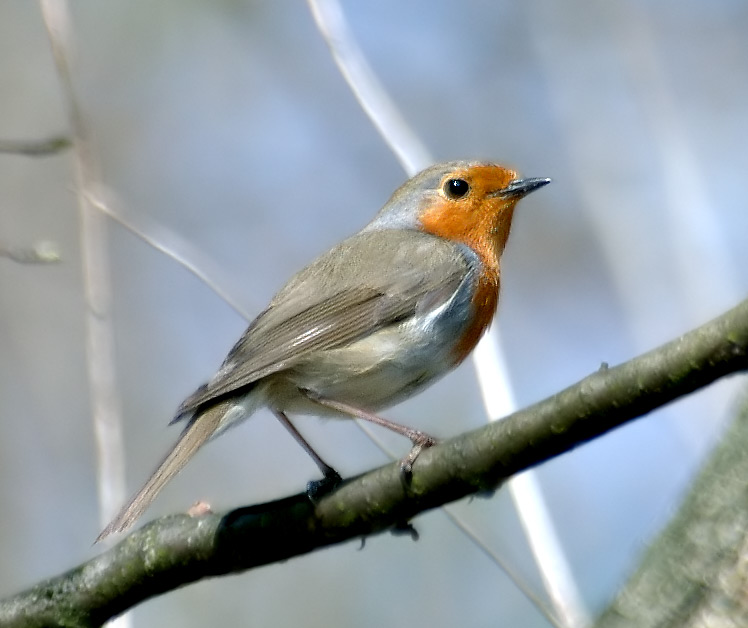
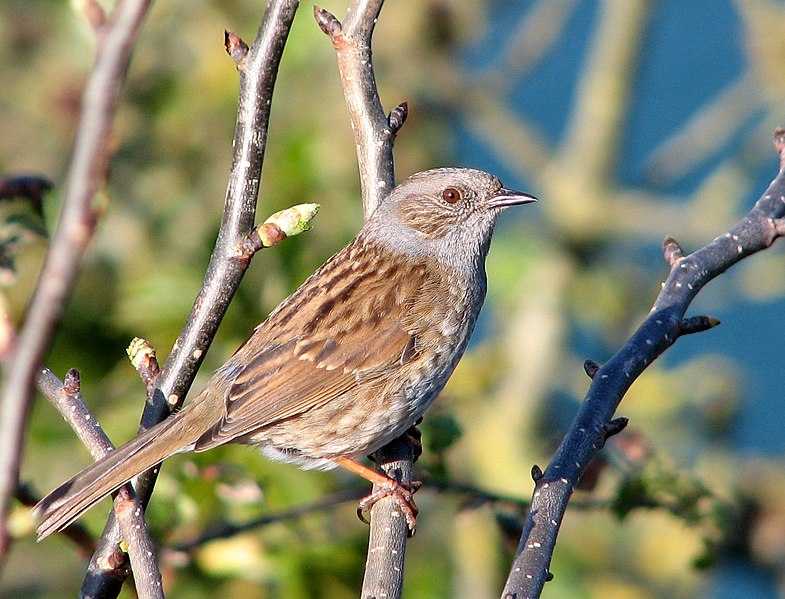
inspire feelings of nurturing and empathy. Although its eyes aren’t as appealingly
huge as the barn owl’s, robins sport a pair of intelligent-looking dark eyes
that take up far more of their face than those of similar birds. Let’s compare
it to the dunnock, a bird so similar in body and bill shape that it is often
mistaken for a “female robin” (in fact, males and females both sport a red
breast).
 |
| Oh Grandmama! |
Whilst the comparatively large eyes of robins may help them when it comes to encouraging regular restocking of the bird table, their real purpose is to allow a longer working day. Robins are one of the first birds you’ll hear during the dawn chorus; by getting up in low light and singing before other birds (and in modern times, the rush hour), they’re more likely to be heard by their audience. In fact, getting their message across is very important to robins…
Homebodies
There are few birds that defend a territory more fiercely
than the robin. The idea that bulls can be riled up just by the colour red may
be a myth, but it’s definitely true for robins. The colour of their fronts is a
literal red flag to these birds, to the extent that they will try to murder the
crudest of robin dummies placed in their territory, even a red cloth. 10 percent of all adults die in territorial disputes, and the colour association
is so deeply ingrained that young robins don’t develop red feathers until
maturity, or they’d risk being pummelled, too.
Unusually amongst birds, both male and female robins hold separate territories all year round, and only come together to raise offspring. This means that robins are one of the few birds that keep singing during the winter, brightening the UK’s famously dull weather and likely cementing their association with Christmas (the practice of putting them on Christmas cards dates back to the Victorians, when postmen were nicknamed “robins” because of their red uniforms). Although their bloodthirsty nature goes against our somewhat sentimental view of the robin, the result is that we tend to become familiar with just one or two robins that live on our home patch. Many gardeners suspect that the same bird always watches them at work, and they’re probably right. Compare this to birds such as blue tits, which move from place to place and turn up erratically in flocks to feed, and you’ll see why it’s easier to foster a relationship with your local robin. This bond is also aided by their noticeably bold behaviour…
 |
| Pictured: young robin discreetly getting changed |
Unusually amongst birds, both male and female robins hold separate territories all year round, and only come together to raise offspring. This means that robins are one of the few birds that keep singing during the winter, brightening the UK’s famously dull weather and likely cementing their association with Christmas (the practice of putting them on Christmas cards dates back to the Victorians, when postmen were nicknamed “robins” because of their red uniforms). Although their bloodthirsty nature goes against our somewhat sentimental view of the robin, the result is that we tend to become familiar with just one or two robins that live on our home patch. Many gardeners suspect that the same bird always watches them at work, and they’re probably right. Compare this to birds such as blue tits, which move from place to place and turn up erratically in flocks to feed, and you’ll see why it’s easier to foster a relationship with your local robin. This bond is also aided by their noticeably bold behaviour…
Gardener’s
little helper
One
of the main reasons we love robins is that they’re so feisty and confident.
These are birds that can be trained to eat from your hand, and will often come
to feed from the bird table the moment that it’s filled, without waiting for
the obliging human to move away! Those who enjoy gardening will also be familiar with
the intent watchfulness of robins, particularly during any activity that involves
disturbing the soil. Why are they so brash, when most birds will skulk for a
good 10 minutes after you’ve gone inside just to ensure it’s safe?
It’s
not that they love us back, sadly—in fact, many individuals would probably
starve if not for their boldness. Robins are predominantly insectivorous—that
is, they mostly eat invertebrates such as worms, insects and spiders. In a cool
climate such as the UK, these foods can be hard to come by, especially during
winter. We have very few specialist insectivores in this country, and many of
them migrate in winter (e.g. swallows) or suffer population crashes during bad
weather (e.g. Dartford warblers). Whilst robins do supplement their diets with
fruits during winter, their ability to live closely to humans and exploit novel
food sources gives them access to the high-protein, high-fat foods that they
prefer, such as mealworms and fat balls. Their attentiveness towards gardeners
is just another clever ruse to get food, and is a habit that was probably
around long before us. All sorts of invertebrate treats get stirred up by large
animals like us as we move through vegetation or dig in the soil. By being
unafraid to snatch these from under our feet, robins save themselves a lot of
effort and searching time, and have made a real success of themselves as a
result.
 |
| "You're going inside?! Fine, I'll do it myself" |
However,
natural selection appears to have purged this ancient behaviour from robins on
mainland Europe. In fact, our perky, bossy little robin is almost unrecognisable:
far from there being one in every urban garden, they skulk in woodlands and are
very nervous of humans. This is because small songbirds have been hunted and eaten by humans on the other side of the Channel for centuries, putting bolder
individuals at a distinct disadvantage and leading to the spread of more
cautious bloodlines. Whilst songbirds have featured on British menus in the past,
the harming of robins has long been frowned upon thanks to folklore that
depicts them as gentle, sympathetic creatures. The robin’s breast, far from
being a violent symbol, was said to be stained red by the blood of the dying
Christ as the bird tried to free him, or scorched as it flew into the fiery
pits of Purgatory to deliver water to suffering souls. All these noble acts
made it very bad luck to kill a robin, and so the cheeky behaviour that we know
and love today has been preserved.
There
are many birds for whom the title of Britain’s National Bird would have seemed
fitting. We could have chosen a bird found nowhere else in the world, such as Scottish Crossbills or Pied Wagtails. We could have honoured the species that we
almost lost, but were rescued by our collective love of animals, such as Red
Kites or Choughs. Yet any other result would have seemed somewhat strange,
given how obvious and enduring our fascination with robins is. Never mind that
their distinctive colouring and beautiful song are intended as battle-cries:
they brighten our long, grey winters, whether they’re out in our parks and gardens
or displayed on our cards. Never mind that they can be found all over the
continent, and on the fringes of two others: the reverence that we and our
ancestors showed towards them means that this is one of the few places where
the special relationship between humans and robins persists. It is thanks to
their recognisability, their bold nature and urban lifestyle that they are one
of the first birds that we recognise as children, even if we never learn to
identify another bird in our lives. The robin truly is Britain's National Bird, and its new title only confirms what many already knew.
 |
| "As your new king, my first act will be to remove all this red from your horrible flag" |

No comments:
Post a Comment