Speckled wood

Speckled wood

Monday, 26 October 2015

Do cheetahs have backwards legs? A question from my six-year old self

You may have noticed that the topics for these blog posts are often inspired by misconceptions I had when I was younger. This entry is no different.

Cheetahs came somewhere at the top of my “favourites” list when I was little. I often tried to imitate them in my games, but found that I was clumsy and slow on all fours. Cheetahs could bend their hind paws forward underneath their chins, kicking their front paws back to meet them between each enormous, graceful bound. I tended to fall off the bed when I tried this.

Go on, give it a go.


In fact, cheetah’s legs seemed to be entirely backwards compared to my own, with their hind legs appearing to angle forwards and their arms bending backwards. I concluded that their knees and elbows were on the wrong way round, and that this was the secret to their immense speed. I was a little bit right, and a little bit wrong, as it turns out. Let me explain.

Here is a human.


Her thigh extends about halfway down her leg, and she stands on the soles of her feet, with her heel touching the floor. It works very well for her unusual upright style of walking. This should sound familiar- if not, I hope you've checked it out with your doctor. This leg design makes her a plantigrade. All primitive mammals were originally plantigrades, but we're in somewhat mixed company these days: bears, other primates, most rodents, raccoons and the weasel family. Big palms and a flat sole are great for gripping things, including trees and food. However, a lot of mammals have switched their adorable little grippy paws for running shoes, and changed the design of their legs in the process...

This is where my friend the cheetah comes in, but to demonstrate, I've hired a friendly dog who has similar leg anatomy.


Dogs, cats and a few other groups of mammals are digitigrades. They walk on their toes with their heels lifted off the ground (as if they're wearing massive high heeled shoes), and it was this heel that I mistook for a backwards knee. The knee is actually close to the body, at the end of a relatively short thigh. If you have a pet willing to be prodded, gently massage the section of the leg above the paw, and you'll feel clusters of bones and tendons similar to the ones in your hands and feet. So why the redesign?

Dogs and cats are predators, so running fast is a useful skill. Having small points of contact with the ground makes movement much more efficient, so they can expend less energy when chasing prey. It also lengthens the legs without any one bone becoming excessively long and potentially weak. This is such a good design that predatory dinosaurs evolved similar legs, and passed them onto their descendants: the birds. Most birds don't make use of this generous gift for its original speed-boosting purpose, but almost all have retained it.  Here is a flamingo to demonstrate. Flamingoes are often falsely thought to have backwards knees, but as you can see, the bend is simply its ankle.

Twins!

Unlike mammalian digitigrades, the ankle and foot bones are fused in the lower section of birds' legs, forming a single, unique bone called the tarsometatarsus. This might have made their dinosaur ancestors' legs stronger, reducing the risk of injury as they chased prey at high speed.

With the festive season fast approaching, you can also become an expert at bird anatomy by examining the remains of a turkey carcass (or bucket of fried chicken, if you prefer). The thigh, which is usually hidden under the living bird's feathers, is short and muscular. Attached to it is the cut commonly known as the drumstick, which is equivalent to your calves and contains the tibula and fibia bones. The tarsometatarsus and toes, whilst interesting, aren't usually present on the bird at the point of sale, unless your butcher was drinking Christmas cocktails on the job.

Of course, predators aren't the only ones modifying their legs for speed, or Earth's great meat buffet would have been licked clean by now. Hoofed mammals, also known as ungulates, have gone one step further with the invention of the unguligrade foot design. Here, the animal walks on its toenails, which are modified into what we usually call a hoof. Many groups have a reduced number of weight-bearing toes, too. This is because running on two strong toes, for example, is more efficient and safe than running on four weaker ones. Come to think of it, ballet would be a lot easier if humans had hooves, but you'd have to sacrifice standing on two legs, which defeats the purpose somewhat.

I would like to apologise to all horse-kind for this picture.

In deer, cows, goats, sheep and antelope, the third and fourth toes of the foot are strengthened to form the classic cloven hoof, with the second and fifth toes showing up as non-weight-bearing dewclaws further up the leg.


Horses have gone even further, running on just a single, extremely strong third toe! The other toe bones are barely there, hugging against their massive neighbour.

Yes. That tiny little toothpick of a bone.

Interestingly, horses can suffer from a genetic condition known as polydactyly, meaning they're born with extra digits. On humans, this manifests itself as six-plus digits on a hand or foot- not always that noticeable unless you're counting- but it gets a little odd when you've only got one functioning toe to begin with. Check out this case of a Belgian foal with the condition.

So if ungulates have managed to evolve even longer, more efficient legs with hooves, why haven't predators done the same? There did once exist a group of hoofed predators called mesonychids, related to today's ungulates. They didn't have the extreme hooves of deer or horses, but a foot design more like that of a rhinoceros, with a flattened, blunt, toenail at the end of each toe. This makes a nice, sturdy surface for running on, but doesn't hold the animal's entire weight like other hoof designs. In rhinos, the toes don't touch the floor at all, and the rear of the "foot" is made of a fleshy pad of fat. It's anyone's guess what sort of footprint was left by a mesonychid on a muddy path, but maybe they had paw pads like a dog.

Sidenote- if somebody could please discover some fossil mesonychid footprints, that would be really cool

They had a superficial resemblance to wolves with freakishly large heads, shortish legs and a fairly inflexible spine, Their hooves might have been great for running, but they probably lacked the versatility of clawed paws; they wouldn't be good for hunting like cats' claws, for example, nor would they have been much use for digging. The reason for their eventual extinction ~30 million years ago is unclear, though they may have competed poorly with more modern predators. I like to think that in some alternative universe, the mesonychids survived and were domesticated into an adorable race of pseudo-puppies, clip-clopping behind their owners with oversized muzzles on their toothsome faces. Adorable.

So there you have it. The rest of the animal kingdom's legs and feet might appear pretty alien to us, but when you look closer, it turns out we're the unusual ones. Take off your socks, take a long hard look at your feet, and tell me they don't look weird to you now. You massive flat-footed freak.


Monday, 7 September 2015

Male Bees Don't Have Fathers: the ins and outs of sex determination.


What determines if we're male or female?

I’ll leave it to the rest of the internet to argue about the complexities of human gender. If you dare, just scroll down to the comments under any article about Caitlin Jenner, and you'll find it doing just that. I’m talking biological sex here: the bits and bobs that lurk in the abdomens and proverbial underpants of living creatures. Although the two sexes are almost universal in the animal kingdom, the mechanisms that control which individuals develop into which sex aren't. These systems have been mucked about to the extreme by evolution, and these are just some of the strange results.

Chromosomes: the birds, but not so much the bees.
However hazy and distant your last science lesson seems, you’re probably vaguely aware that human sex is (predominantly) determined by our chromosomes. We all inherit an X chromosome from our mothers, and depending on which sperm wins the race, dad donates an X or a Y. Two Xs is a recipe for a female reproductive system, and XY is a recipe for danglies galore. Now, not to dampen anyone’s proud masculinity, but the Y chromosome is tiny and a bit useless, with very few functioning genes on it. You may also remember that this leaves men more vulnerable to any dodgy recessive genes on their X chromosome. As females have two Xs, they’re more likely to inherit at least one normal version of the gene. This is why men are more prone to  problems such as red-green colour-blindness, which is caused by a faulty gene on the X chromosome.

We share very similar systems with other mammals and the odd species of insect, but birds have flipped it on its head. In the avian genome, a different pair of chromosomes wield the power of sex-determination: the Z and the W. In this system, Z is the normal-sized chromosome whereas W is its weedy counterpart, and whilst males have two Zs, females are ZW. As a result, female birds are at a greater risk of dodgy genes lurking on the Z – domestic hens are more susceptible than cockerels to a condition that makes them shake uncontrollably. However, savvy poultry breeders can use genes like these to find out the sex of their birds without paying for expensive genetic tests or waiting for them to grow up. A commonly-used gene can be found on the Z chromosome, where it causes newly-hatched chicks’ feathers to grow more quickly. When slow-feathering hens are crossed with fast-feathering males, all their daughters will inherit their father’s Z chromosome, along with his fast feather growth. Males will inherit slower-growing feathers, allowing the breeder to pick out the fuzzy females for the farm. 
Awww!
...Unless you're a male chick.


Genetic halflings
Ants, bees and wasps are generally pretty strange, and their sex determination system is no exception. Many species live in vast colonies in which only a single individual – the queen—is in charge of breeding. It’s a big responsibility; the kingdom needs an army of daughters and only a handful of sons to succeed, and so leaving her offspring’s sex to chance just isn’t an option for the queen. Thankfully, she can control whether her eggs hatch into sons or daughters, simply by choosing whether to add sperm. Although pretty celibate during their reign, queens attract lots of male attention when they leave their natal nest, and they nurture the resulting sperm for the rest of their lives. If a queen chooses to add sperm to an egg, it will become a female, with a set of chromosomes from each parent. Eggs that don’t receive sperm develop into males, inheriting just a single set of chromosomes from their mother. That’s right—male ants, bees and wasps might have plenty of half-sisters, but they don’t have fathers. True mummy’s boys indeed.

Hot girls wanted
Not all animals have their sex determined at conception. For some species, environment can also have a powerful effect on sex, during development or even in adulthood.

Some reptiles lay eggs that develop into males or females depending on their incubation temperature. This system is mostly found in crocodiles and chelonians (turtles, tortoises and terrapins), and it varies between species. In snapping turtles, females develop when eggs are either kept very cool, or very warm, whilst males hatch at intermediate temperatures. In many other species, warmer clutches hatch into females, whilst eggs in a cool nest will find themselves with a lot of brothers. This system appears to work through a temperature-sensitive enzyme called aromatase, which can convert testosterone into oestrogen under the right conditions. As different females will choose different sites to lay their eggs, the sex ratio stays fairly even. However, the temperature parameters may need to adjust as climate change takes hold, or there'll be a lot of horny female tortoises looking for mates.

"Hey babe."

One fish, two fish, girl fish, dude fish
Fish are even more flexible, with many species able to casually change sex in adulthood to cash in on breeding opportunities. This is usually a one-way system, with most or all young fish hatching as one sex, and changing permanently if the opportunity arises. For example, wrasse are mostly born female, and live in colonies led by a dominant male. The male bullies his wives to keep their stress hormones up, inhibiting sex change to ensure he has plenty of mates and no competition. However, if he dies, the females don’t rejoice and live happy lives free from bullying and oppression. The largest one simply becomes male, and begins the reign of terror all over again. The opposite is true in the more peaceful society of the clownfish, where all fish are born male, but happily become female if their mate dies. Unlike the wrasse, older clownfish are better off using their large bodies to make lots of eggs instead of fight, and so becoming female is the coveted goal. The fish don’t wait around: in some species, transforming individuals show dramatic shifts in behaviour almost immediately after the social setup changes. Alterations in colour and size follow as the old sex organs shrink and new ones awake from dormancy, and within a week, the fish is making eggs or sperm like a pro.

Thursday, 2 July 2015

What IS plankton?

Any documentary or article on ocean life is bound to mention plankton at some point. It’s a fundamental part of our ocean ecosystems that sustains countless billions of invertebrates, fish, seabirds and marine mammals- and by extension, us! Yet we seldom talk about plankton outside its role in sustaining larger, flashier organisms. Plankton never asked to get eaten by a whale, but it rarely gets its time in the spotlight unless it’s being swallowed by something. As a result, many people aren’t all that sure what plankton actually IS.

It's this guy... right?

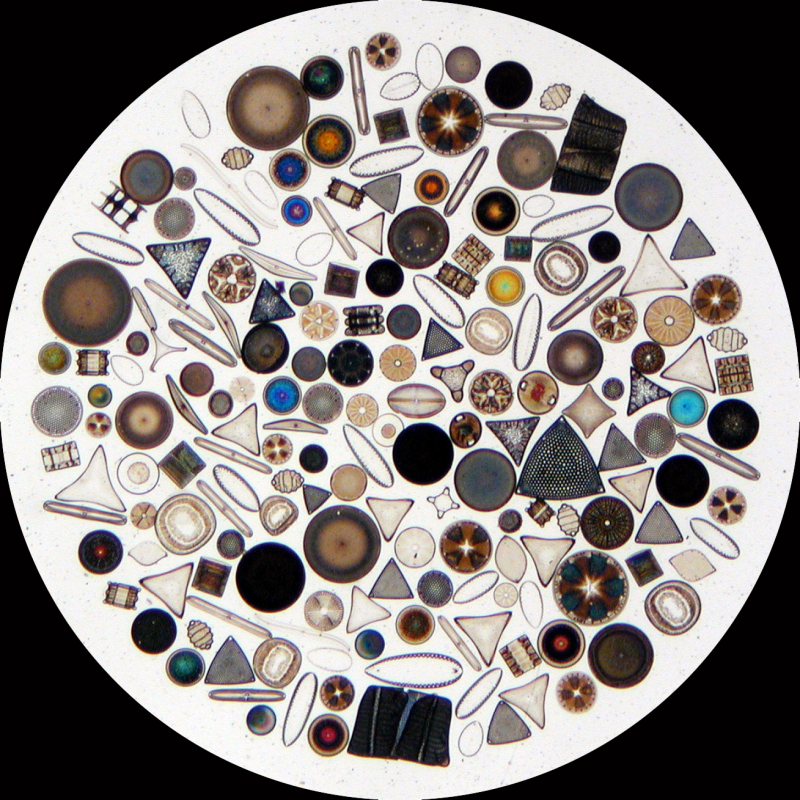
In fact, plankton is so little-discussed that you could be forgiven for thinking that it’s the name of a single, tiny and very abundant species floating in our oceans. As a child, my mum described plankton to me as “a mixture of plants and animals”, and I therefore imagined it as the lovechild of a shrimp and Bulbasaur, with clusters of green bulbs on its back and rows of tiny legs. Yet in reality, when a whale takes an enormous mouthful of plankton-rich seawater, it isn’t the equivalent of swallowing a tonne of homogeneous steak. This is more of a varied and colourful stew, with countless ingredients from multiple kingdoms of life. “Plankton” is not a biological classification like “mammal” or “rodent”: it’s a title earned through lifestyle. If you are a living thing that drifts in the water column, then congratulations: you are plankton. There are some very strange organisms under this vast umbrella term that really do deserve a closer look… although you may need to pack a microscope.


Plankton both directly and indirectly support some of the largest animals on our planet. But it’s not just big creatures that eat plankton- there’s an entire food web within the planktonic world itself, and photosynthesising organisms, or phytoplankton, are at the bottom of it. However, you won’t find anything particularly leafy floating in the soup: the oceans are the realm of algae. We often think of algae as simply being tiny plants, but they actually belong to an entirely different kingdom of life to the terrestrial plants we are familiar with. All land plants- mosses, trees, flowers, conifers, grasses- evolved from an ancestral aquatic alga that adapted to dry land around 450 million years ago, and very few of its descendants have made the transition back to the sea. Under the microscope, algae have an enormous diversity of shapes and forms compared to their larger terrestrial cousins.

Algae. It's all green and same-y.

Some exist as single cells. Others form bizarrely-shaped colonies. Some are bioluminescent, and light up the sea during large nocturnal gatherings. While most drift benignly in the water column, other groups use flagellae (tails) to propel themselves through the water, and may even supplement their photosynthesising by hunting smaller microorganisms. This is no homogeneous field of daisies.

Yep, allllll green and same-y. 

But algae aren’t the only tiny sun-worshippers in the sea. Some forms of bacteria- called cyanobacteria- can also photosynthesise. In fact, they pretty much invented photosynthesis, and they changed the world forever by doing so. About 3 billion years ago, oxygen was almost non-existent in Earth’s atmosphere, and any that appeared was quickly taken up by the vast amounts of iron in the crust, creating iron oxide, or rust. As cyanobacteria evolved and became more and more successful, their photosynthesis produced vast amounts of oxygen. This caused mass rusting of the planet’s iron reserves, creating huge depositions of iron oxide that appear as striking bands of bright orange in the Earth’s crust. Once the iron sinks were exhausted, oxygen began to accumulate in the atmosphere-- great news for our very distant, microscopic ancestors, as it led to the evolution of mitochondria (our cells’ powerhouses) and bigger, more complex bodies. However, a vast number of oxygen-intolerant species were lost forever in one of Earth’s largest mass extinction events, and the planet underwent a reverse greenhouse effect, becoming swamped in snow and ice for the next 300 million years. Not bad for an organism that looks like a Smurf’s nose hairs.


Feeding on this garden of freaks is a whole host of animals and single-celled organisms, collectively called zooplankton. Some are instantly familiar to us: many kinds of tiny crustaceans live as plankton, including krill, the staple food of the blue whale. Others, however, are downright weird. Amongst many examples are tiny flying slugs known as sea angels…


…amoebae with shells…


…the adorably-named tintinnids…


… and gigantic strings of clear jelly called salps.

Fun fact: the two creatures in this picture are more related than you'd think

But whilst all of these creatures typically spend their whole lifecycles as planktonic nomads, many others come along for the ride exclusively during their youth. You see, childhood works a little differently in the oceans. Land animals have had to invent all sorts of ingenious ways to stop their developing young from drying out, mostly by confining their most vulnerable growth phases to a nice damp waterproof capsule, such as an egg or uterus, until they can survive in the outside world. However, to marine creatures, the seas are just one big bath of amniotic fluid into which they can cast their offspring without a care. Many therefore undergo bizarre planktonic larval phases that just aren’t visible in their land-dwelling relatives, simply because they would usually be confined to eggs or their pregnant mothers.

Take snails, for example. Land snails hatch as miniature shelled versions of the adults, but their marine cousins go through multiple larval stages that look nothing like the creatures they will eventually become. The second of these incarnations is called the veliger. 

Um...what?
It flies through the water on hairy wings, and undergoes a painful-sounding developmental process in which all of its organs twist 180 degrees relative to the rest of its body, so that it can fit into its developing shell. As a result, its anus ends up in a fairly inconvenient place...

All right when you're stretched out, not so great when you're napping inside...

The larvae don’t join the plankton crowd as a kind of self-discovery gap-year experience before they settle down. Having a tiny, mobile larval stage is a great way for creatures that are slow or fixed to the sea floor to exploit new parts of the ocean. This specialised dispersal phase means that some species apparently regress to a simpler form upon reaching adulthood. For example, larval sea squirts bear a striking resemblance to tadpoles, with eyes, rudimentary “brains” that control their movement, complete but non-functioning digestive tracts, and a spine-like structure called a notochord that marks them as close relatives of the vertebrates. But when they find a suitable place to live, they plant themselves headfirst into the ground, and absorb all of these complex features to begin life as simple, filter-feeding adults, leaving no trace of their relatively advanced place on the tree of life. 
Pretty, but brainless


Meanwhile, some larvae show a remarkable amount of ingenuity when searching for a new home. Rather than drifting aimlessly and risking settlement in an unsuitable spot, coral larvae listen for the sounds of distant reefs with the fringe of fine hairs (cilia) on their bodies. They can distinguish the typical sounds of a busy reef from other ocean noise with astonishing precision, allowing them to swim towards their nearest friendly neighbourhood.

Who knew mouldy gherkins were so smart?

 For many larvae, navigating towards a suitable permanent home is a race against time: while some are equipped to feed, many carry a limited supply of yolk for energy, and will eventually die if they stay adrift for too long. Fish, for example, undergo a larval stage in which they lack fins, scales or swim bladders, and rely on a distended belly full of yolk for sustenance. 

At least you can sort of TELL that they're fish.

As with other plankton, they must navigate a whole suite of dangers during this time, including adult fish, jellyfish and indiscriminate filter feeders like basking sharks. Unsurprisingly, creatures with planktonic offspring must produce a vast number of eggs if any are to survive their dangerous childhood in the ocean’s great microscopic buffet.


Plankton might not have the dangerous sex-appeal of a great white shark. Tourists seldom spend hundreds of pounds to go on boat trips to see them. Doctors’ waiting rooms don’t contain tanks of exotic and colourful plankton to calm the nerves of their patients. Although in our heart of hearts we know that they’re by far the most important inhabitants of the ocean, sometimes it’s hard to appreciate plankton beyond their supporting roles as snack bar and crèche to our favourite ocean creatures when they’re so incredibly tiny. Even so, their unfathomable yet practically invisible diversity is surely worth celebration of its own. Each teaspoon of seawater is home to an otherworldly soup of nomadic baby animals, alien algae and single-celled oddities, as different from each other as you are from the banana in your lunchbox or the bacteria on your skin. If you find yourself struggling for inspiration, just remember: if you don’t have a microscope handy to picture them, your wildest imagination might be just as accurate.


Thursday, 18 June 2015

Why are we so obsessed with robins?


Last week, it was announced that the humble robin, darling of Christmas card manufacturers worldwide, has won a poll to find Britain’s unofficial “National Bird”. Beating off its closest rival the barn owl by over 5000 votes, it confirmed what a love affair we Brits have with the little red bird. It’s strange that, for a nation with more soft spots than a furniture shop when it comes to wildlife, we seem to have a particularly soft one for robins. What makes them so appealing to us? Do they deserve their fuzzy, friendly, somewhat festive reputation, and is there anything particularly British about a bird that ranges as far afield as Siberia and North Africa?

Here are my theories on why we’re so hung up on the robin, and the little biological quirks that have moulded this bird into our firm favourite.


    The eyes have it


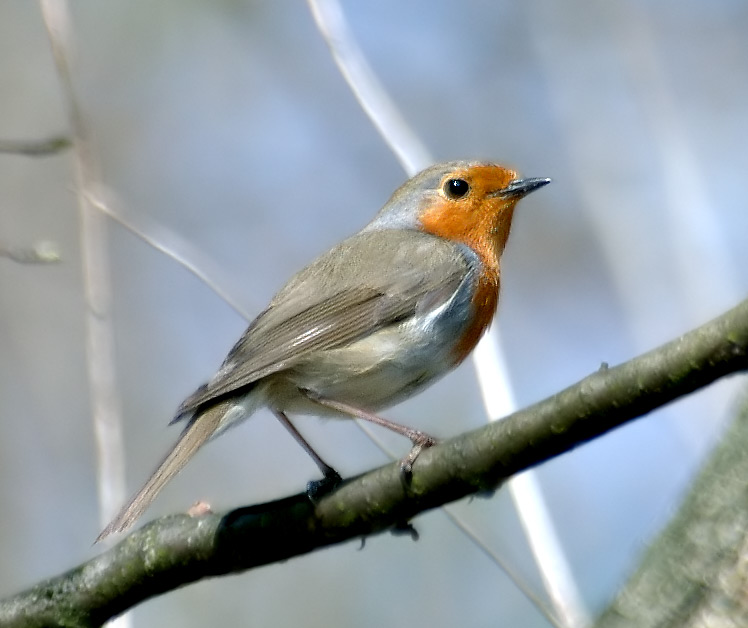
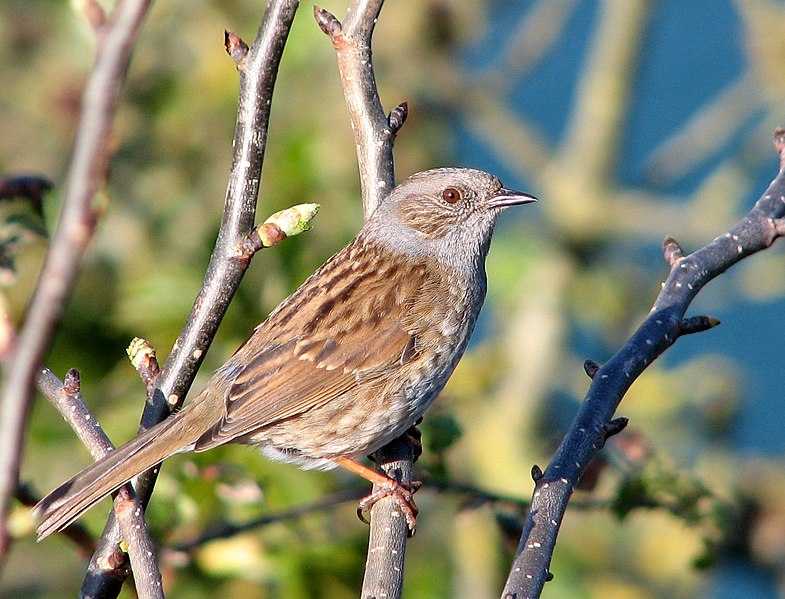
We humans are suckers for a big pair of eyes. Puppies, kittens, sugar gliders and tree frogs- large eyes instantly melt our hearts and inspire feelings of nurturing and empathy. Although its eyes aren’t as appealingly huge as the barn owl’s, robins sport a pair of intelligent-looking dark eyes that take up far more of their face than those of similar birds. Let’s compare it to the dunnock, a bird so similar in body and bill shape that it is often mistaken for a “female robin” (in fact, males and females both sport a red breast).

Oh Grandmama!


Whilst the comparatively large eyes of robins may help them when it comes to encouraging regular restocking of the bird table, their real purpose is to allow a longer working day. Robins are one of the first birds you’ll hear during the dawn chorus; by getting up in low light and singing before other birds (and in modern times, the rush hour), they’re more likely to be heard by their audience. In fact, getting their message across is very important to robins…

     Homebodies


There are few birds that defend a territory more fiercely than the robin. The idea that bulls can be riled up just by the colour red may be a myth, but it’s definitely true for robins. The colour of their fronts is a literal red flag to these birds, to the extent that they will try to murder the crudest of robin dummies placed in their territory, even a red cloth. 10 percent of all adults die in territorial disputes, and the colour association is so deeply ingrained that young robins don’t develop red feathers until maturity, or they’d risk being pummelled, too.

Pictured: young robin discreetly getting changed

Unusually amongst birds, both male and female robins hold separate territories all year round, and only come together to raise offspring. This means that robins are one of the few birds that keep singing during the winter, brightening the UK’s famously dull weather and likely cementing their association with Christmas (the practice of putting them on Christmas cards dates back to the Victorians, when postmen were nicknamed “robins” because of their red uniforms). Although their bloodthirsty nature goes against our somewhat sentimental view of the robin, the result is that we tend to become familiar with just one or two robins that live on our home patch. Many gardeners suspect that the same bird always watches them at work, and they’re probably right. Compare this to birds such as blue tits, which move from place to place and turn up erratically in flocks to feed, and you’ll see why it’s easier to foster a relationship with your local robin. This bond is also aided by their noticeably bold behaviour…

     Gardener’s little helper


One of the main reasons we love robins is that they’re so feisty and confident. These are birds that can be trained to eat from your hand, and will often come to feed from the bird table the moment that it’s filled, without waiting for the obliging human to move away! Those who enjoy gardening will also be familiar with the intent watchfulness of robins, particularly during any activity that involves disturbing the soil. Why are they so brash, when most birds will skulk for a good 10 minutes after you’ve gone inside just to ensure it’s safe?

It’s not that they love us back, sadly—in fact, many individuals would probably starve if not for their boldness. Robins are predominantly insectivorous—that is, they mostly eat invertebrates such as worms, insects and spiders. In a cool climate such as the UK, these foods can be hard to come by, especially during winter. We have very few specialist insectivores in this country, and many of them migrate in winter (e.g. swallows) or suffer population crashes during bad weather (e.g. Dartford warblers). Whilst robins do supplement their diets with fruits during winter, their ability to live closely to humans and exploit novel food sources gives them access to the high-protein, high-fat foods that they prefer, such as mealworms and fat balls. Their attentiveness towards gardeners is just another clever ruse to get food, and is a habit that was probably around long before us. All sorts of invertebrate treats get stirred up by large animals like us as we move through vegetation or dig in the soil. By being unafraid to snatch these from under our feet, robins save themselves a lot of effort and searching time, and have made a real success of themselves as a result.


"You're going inside?! Fine, I'll do it myself"

However, natural selection appears to have purged this ancient behaviour from robins on mainland Europe. In fact, our perky, bossy little robin is almost unrecognisable: far from there being one in every urban garden, they skulk in woodlands and are very nervous of humans. This is because small songbirds have been hunted and eaten by humans  on the other side of the Channel for centuries, putting bolder individuals at a distinct disadvantage and leading to the spread of more cautious bloodlines. Whilst songbirds have featured on British menus in the past, the harming of robins has long been frowned upon thanks to folklore that depicts them as gentle, sympathetic creatures. The robin’s breast, far from being a violent symbol, was said to be stained red by the blood of the dying Christ as the bird tried to free him, or scorched as it flew into the fiery pits of Purgatory to deliver water to suffering souls. All these noble acts made it very bad luck to kill a robin, and so the cheeky behaviour that we know and love today has been preserved.

Wednesday, 28 January 2015

Slugs and snails and evolutionary tales


Is a snail just a slug with a house on its back?
Or is a slug just a naked snail?


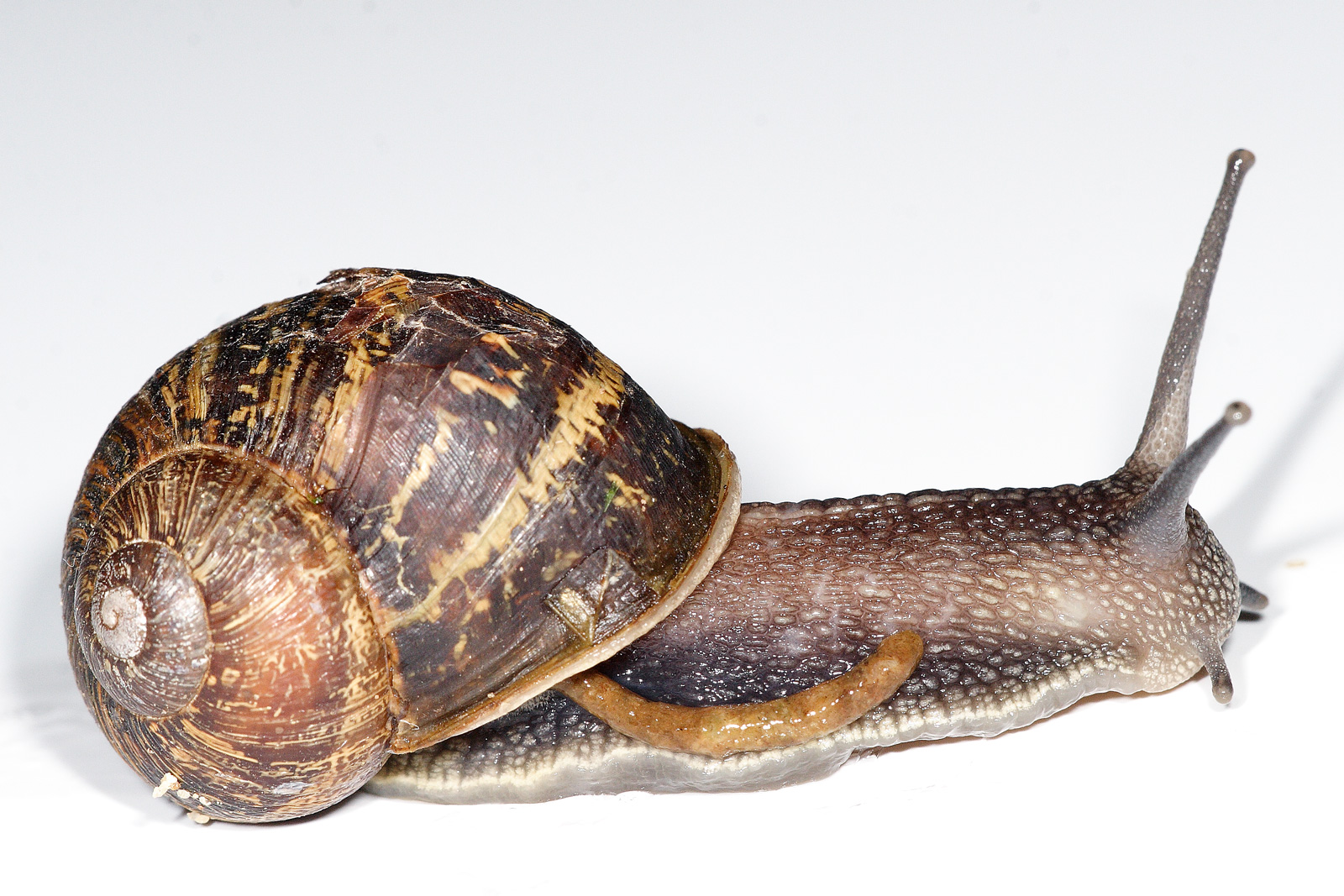
There’s no denying that slugs and snails are closely related. Both have a healthy appetite for greens, hold a reputation for being slow, and leave a slimy trail wherever they wander. But which one came first? 

Slugs and snails belong to a big group of animals called the molluscs. Their relatives include limpets, mussels, oysters, squids and octopuses, and the long-extinct ammonite. What you’ll notice about most of these animals is that they have a shell. The world’s first mollusc probably possessed one, and aeons later, just a handful of its descendants have done away with their portable houses. Shells are the key to molluscs’ success: although they evolved in the sea and need to stay moist, many groups have conquered shorelines and dry land thanks to their shells, which provide a damp hiding-place for their vulnerable bodies. They also make a great defence against predators, as anyone who’s ever tried to prise a limpet off a rock will know.

The ancestor of slugs was probably very snail-like, but over millions of generations, their shells became smaller and less important. Some species even carry around an adorable little remnant of their former shells, like a tiny backpack. 


Why would any self-respecting mollusc evolve to go naked, though? Despite their usefulness, there are some situations where having a shell is a bit of a drag. Shells can only protect you from a certain amount of attack before they break, and some predators have evolved clever ways of getting into them.
The "whack it til it breaks" method
The "gravity-assisted" method

Growing a stronger shell isn't always an option, as it requires a lot of nutrients like calcium, and for mobile molluscs like snails, carrying such a heavy load can only make them slower! Therefore, sometimes the best strategy is to hide away from predators in cracks and crevices. Whilst snails can get into some very snug spots, the streamlined bodies of slugs are much better adapted to burrowing and fitting into small gaps. This is why they often turn up uninvited in people’s houses, by squeezing underneath doors, up plugholes, and through holes made for wiring or pipes in walls. 


"Honey, I'm home!"

Fitting into tight spaces also helps slugs to find somewhere cool and shady when the sun is bright, getting around the loss of their climate-controlled shells. But slugs can’t stay under cover forever. They have to emerge to feed, potentially making them vulnerable to predators. I say "potentially", because slugs don't have many enemies thanks to their rather unpleasant defense strategy. Anyone who allowed creepy crawlies to explore their hands as a child will know that the slime of slugs and snails feels very different. Whilst a snail trail easily rubs or washes off your skin, handling a slug will make you feel as if a tube of PVA glue has been emptied over your hands, and as the slime easily absorbs water, it needs more than a good rinse to wash it off. Eating a slug with its tough, rubbery skin and mouth-clogging, grooming-resistant slime is not an appetising experience for most animals, so the majority leave them in peace.

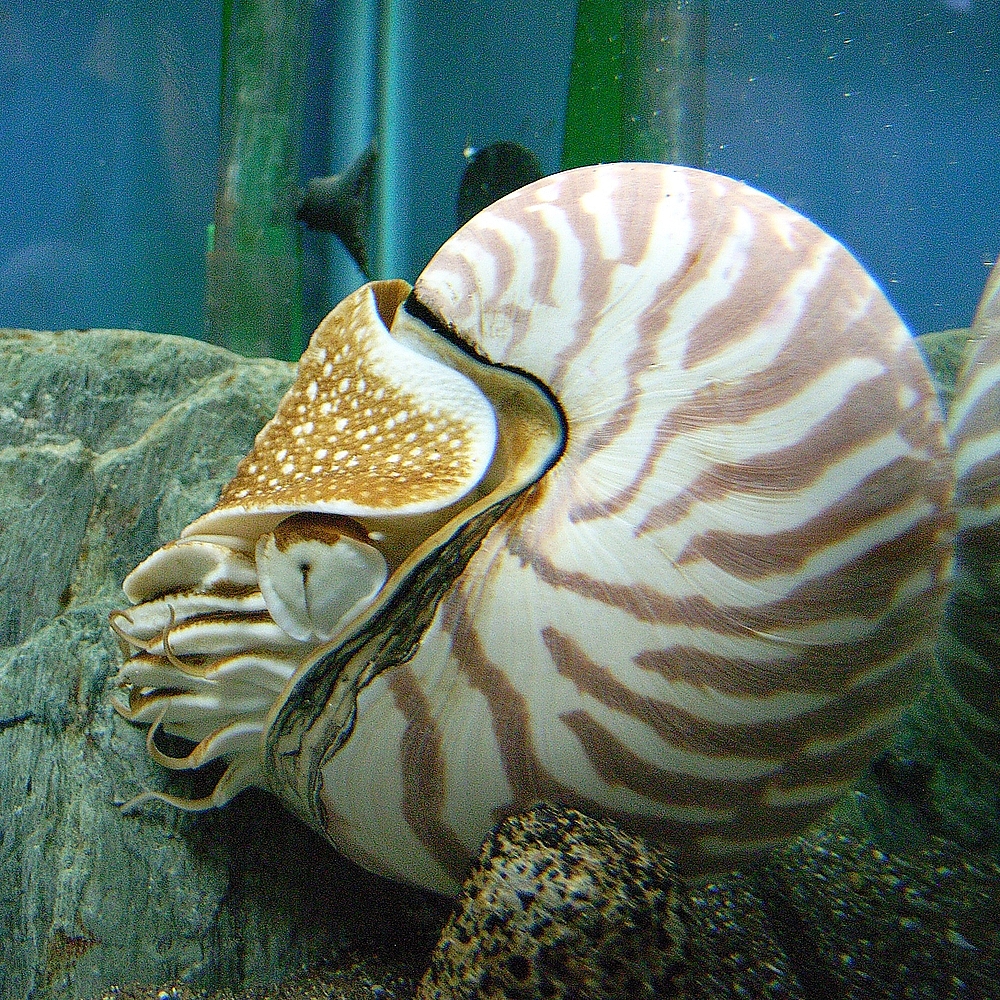
Slugs aren’t the only mollusc to ditch their shells for a different lifestyle. During the Jurassic period, the sea was full of ammonites; like snails, these animals retreated into their shells and sat tight when under attack, sacrificing their ability to swim fast. However, only one of their descendants has kept its shell to this day—the rare but beautiful Nautilus.


Cuttlefish and squid have shrunk their shells and relocated them to the inside of their bodies, with some species using them as a buoyancy device—this is the cuttlefish “bone” that you can find washed up on beaches. Meanwhile, the octopus family has gone one step further, getting rid of their shells entirely. This makes them masters of changing shape and fitting into impossibly small spaces, giving them the upper hand both in hiding from predators and ambushing prey.

These amazing animals show that there’s a lot to be said for coming out of your shell. Whilst most of their relatives still cling to the comfort and safety of their ancestral defenses, slugs demonstrate that with a bit of ingenuity (and a whole lot of natural selection), life in the nude isn’t so bad after all. Why more people haven't adopted them as their inspiration in life...


...I have no idea.